Frequently asked questionsYour questions, our answers
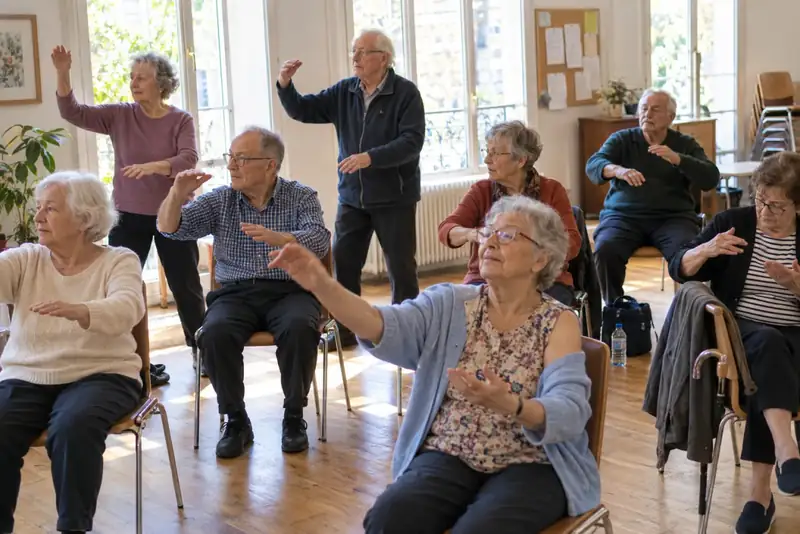
Can people practice seated?
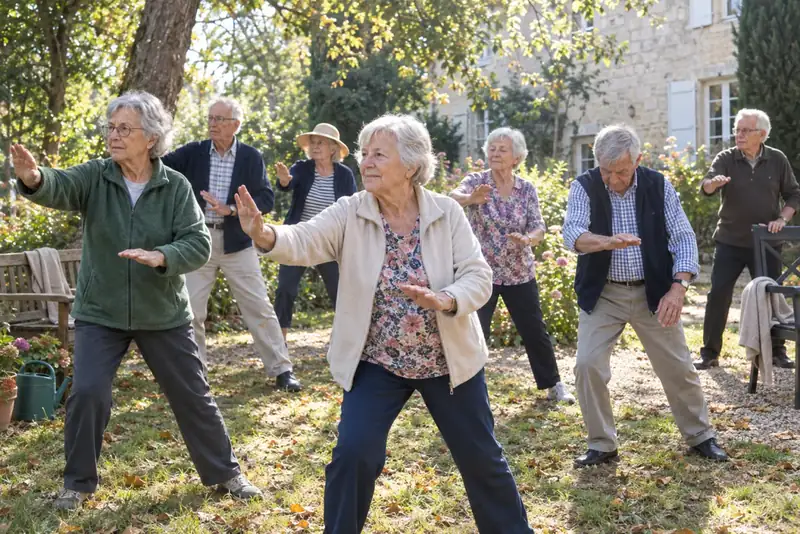
Yes. The movements can be done standing or seated on a chair, and the session adapts to each person.
Does Tai Chi help prevent falls?
Among older people who live at home, several reviews of studies associate Tai Chi with fewer falls and better balance. In care facilities, a Cochrane review updated in 2025 concludes that exercise probably reduces residents’ falls while it is practiced: see “What the studies say” on this page. Tai Chi does not replace medical care.
How many residents can take part?
From 5 to 15 people per session, depending on the format: up to 5, up to 10 or up to 15 participants.
Does the activities team need to be present?
No. Sessions can run completely on their own: the presence of the facility’s activities team is not necessary, but it is of course very welcome, and anyone can join in.
Is a medical opinion needed?
Tai Chi and Qi Gong do not replace medical care. Sessions are adapted to the group’s level; if in doubt, each resident can ask their doctor, according to the facility’s rules.
Do I need special clothing or equipment?
No. No equipment is needed. Comfortable clothes are enough, even everyday ones; flat shoes are recommended. Just provide some clear space.
How long does a session last?
One hour: it is the most requested format. A shorter or longer session is possible depending on your needs.
How much does a session cost?
€110 for up to 5 participants, €140 for up to 10 and €180 for up to 15, which is €22 to €12 per person. A quote is provided on request. These prices are net: UNITY is an association not subject to VAT, so no VAT is added. The exact amount appears on the quote.
Is there a discovery session?
Yes. A free discovery session, with no commitment, is included in all our class formats.
Where do you work?
Throughout the Paris region (Île-de-France), directly at your facility. A session is ordered on quote, then invoiced to the facility.
Do people need prior experience?
No. Sessions are open to beginners and adapted to the group’s level.